
The reliability of ceramic heating elements is a concer […]
The reliability of ceramic heating elements is a concern that keeps procurement and engineering teams up at night — and for good reason. A single batch of inconsistent heaters can stall production lines, trigger field failures, or create safety risks that damage your brand. The truth is, reliability isn't something you inspect into a product at the end of the line. It's built through deliberate, end-to-end process control that starts long before the first unit is fired.
Manufacturers ensure the reliability of ceramic heating elements through application-specific design, controlled material inputs, repeatable manufacturing processes, multi-stage testing, and full batch traceability. Final inspection alone cannot guarantee reliability — it must be the last step in a chain of verified controls that spans from raw material selection through real-world performance feedback.
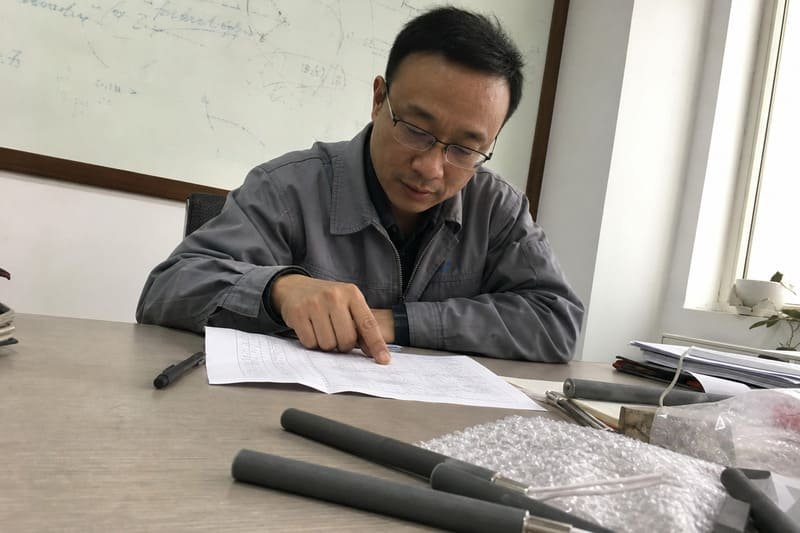
So what does this chain actually look like from the inside? I work in a ceramic heating element factory in Xiamen, and I see these controls in action every day. Below, I'll walk you through each critical stage — not as a generic checklist, but with the specific questions you should be asking any supplier before you commit to a purchase order.
Why Does Reliability Start With Application-Specific Design?
Too many buyers assume that a ceramic heating element is a commodity — pick a wattage, pick a size, and you're done. This assumption is one of the fastest paths to premature field failure. A heater that performs beautifully in a lab benchtop test can fail within weeks in your actual product if the operating conditions weren't fully accounted for in the design phase.
A ceramic heating element's reliability can only be defined against its intended application. The target temperature, heat-up rate, supply voltage, power density, control method, duty cycle, installation constraints, heat dissipation path, ambient environment, and expected service life all shape the design parameters. Without this definition, neither the manufacturer nor the buyer can meaningfully evaluate whether a heater is "reliable."
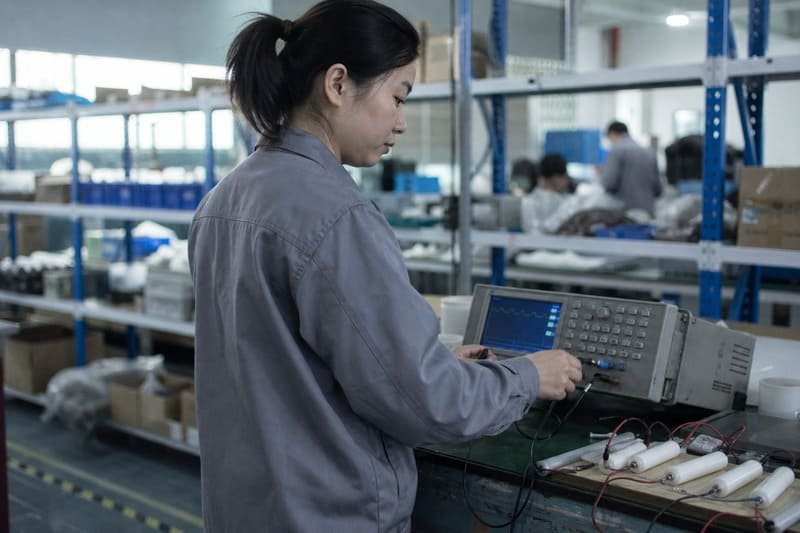
What Parameters Actually Matter?
In our manufacturing and quality-control experience, here are the key application variables that directly influence heater design and, therefore, reliability:
| Application Parameter | Why It Affects Reliability | What You Should Tell Your Supplier |
|---|---|---|
| Target temperature | Determines substrate material choice and conductor composition | Steady-state temp and any peak/transient temps |
| Heat-up time | Affects power density and thermal shock risk | Required time to reach target under load |
| Supply voltage & power | Drives conductor trace design and dielectric requirements | Nominal voltage, tolerance range, AC/DC |
| Control method | PID, on/off, PWM — each creates different thermal cycling profiles | Controller type, switching frequency |
| Duty cycle | Continuous vs. intermittent use changes fatigue and aging behavior | Hours per day, cycles per hour |
| Installation & heat dissipation | Poor thermal contact or restricted airflow can cause local overheating | Mounting method, contact material, enclosure details |
| Operating environment | Humidity, corrosive gases, altitude, and vibration all matter | Environmental conditions at the heater's location |
| Expected service life | Sets the baseline for aging validation | Target hours or cycles |
The Prototype Trap
Here's something I've seen repeatedly: a buyer receives a prototype sample, tests it in the lab, gets great results, and immediately places a mass-production order. Six months later, field failures start rolling in.
Why? Because a successful prototype does not guarantee stable mass-production performance. The prototype may have been made with a particularly good batch of raw material, by your supplier's most experienced technician, under ideal conditions. In our experience, the gap between "one good sample" and "ten thousand consistent units" is where most reliability problems hide.
Key takeaway for buyers: Before approving mass production, ask your supplier how they translate prototype success into repeatable process controls. If they can't explain this clearly, that's a red flag.
The conversation about reliability should happen before design finalization — not after the first complaint. Share your full operating conditions with your manufacturer. The more we know about your application, the better we can design a heater that will actually survive in it.
How Do Controlled Material Inputs Affect Ceramic Heating Element Quality?
Raw materials are the foundation of every ceramic heating element, yet this is one of the most overlooked areas in supplier evaluation. Buyers often focus on the finished product specs and never ask what goes into the substrate, the conductor paste, or the insulating layers. This is a mistake, because even small variations in raw material composition can cause significant shifts in resistance, thermal conductivity, and mechanical strength across production batches.
Controlled material inputs are essential to ceramic heating element reliability because the ceramic substrate purity, conductor paste formulation, and binder chemistry directly determine electrical performance, thermal behavior, and mechanical durability. Identical material labels from different suppliers — or even different lots from the same supplier — do not guarantee identical performance in the finished heater.
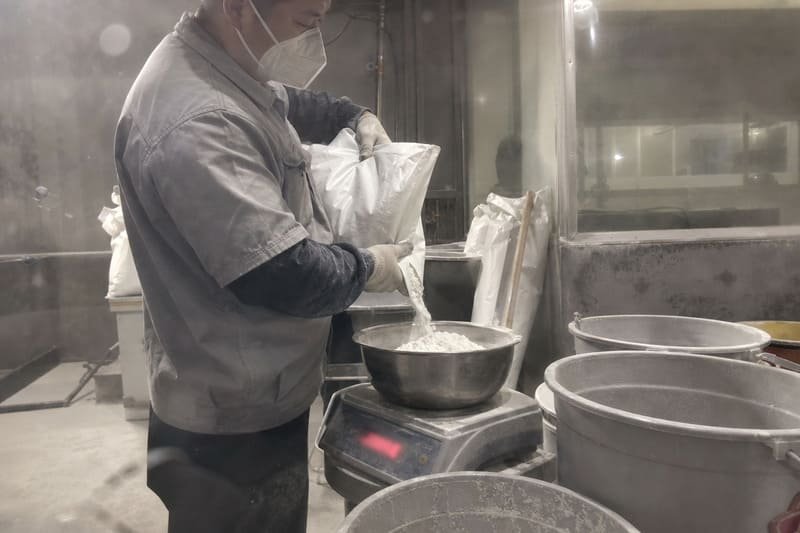
What We Check at Incoming Material Inspection
In our factory, every batch of critical raw materials goes through incoming inspection before it enters the production line. Here's what this looks like in practice:
- Ceramic powder (e.g., alumina, aluminum nitride): We verify purity levels, particle size distribution, and moisture content. Variations here affect sintering density and thermal conductivity.
- Conductor paste (e.g., tungsten, molybdenum, silver-palladium): We check viscosity, solid content, and metallic particle size. These directly influence the printed trace's resistance value and uniformity.
- Binder and solvent systems: We verify composition and batch consistency, since these affect green-body strength and burnout behavior during sintering.
- Insulating and protective layers: Dielectric materials are checked for composition consistency and application properties.
Why Batch-to-Batch Variation Is a Hidden Risk
Let me share something from our experience. We once had a situation where a conductor paste supplier changed a minor additive without notifying us. The paste looked the same, felt the same, and passed the supplier's own spec sheet. But during our production, we noticed a subtle shift in resistance values across the batch. Our incoming inspection caught the drift, and we held the material before it could affect finished product.
This is why supply chain control is a reliability issue, not just a purchasing issue. Buyers evaluating ceramic heating element manufacturers should ask:
- Do you have approved material supplier lists with qualification records?
- How do you handle lot-to-lot variation from your material suppliers?
- What incoming inspection records can you share?
- How do you trace a finished heater back to its raw material batches?
If a manufacturer can answer these questions with documented evidence, that tells you far more about reliability than any marketing claim.
What Role Does Process Control Play in Ceramic Heater Reliability?
The manufacturing process for ceramic heating elements involves multiple high-precision steps — tape casting or dry pressing, screen printing, lamination, sintering, metallization, and assembly. Each step introduces potential variation. If those variations aren't controlled, they compound. A 2% drift at printing plus a 2% drift at sintering doesn't give you 4% variation — it can give you unpredictable, non-linear performance shifts.
Process control is the backbone of ceramic heating element reliability because each manufacturing step — from substrate forming through sintering to final assembly — introduces variables that must be monitored and held within defined limits. Without documented, repeatable process controls, even the best materials and design will produce inconsistent results.
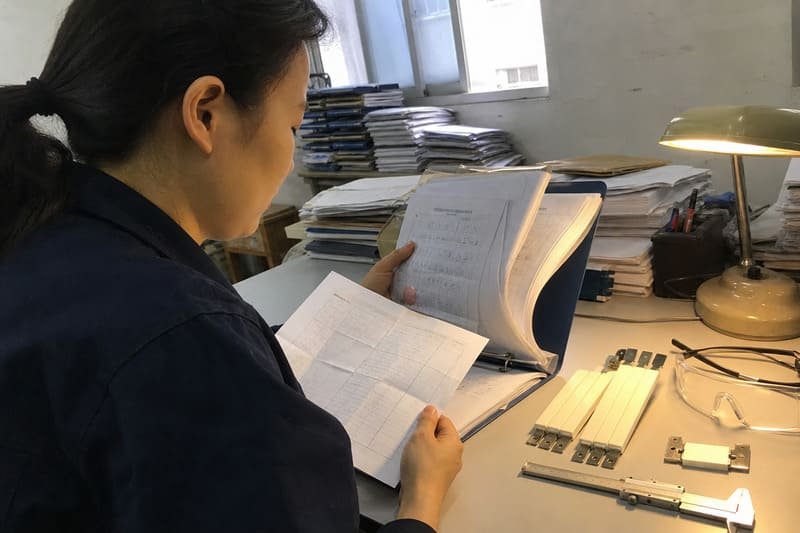
Critical Process Steps and What to Verify
Here's a breakdown of the key manufacturing steps and the controls that matter most, based on our daily production experience:
Substrate Forming
Whether we're using tape casting or dry pressing, the ceramic substrate must have uniform thickness and density. Variation here leads to uneven heat distribution in the finished product. We monitor:
- Thickness tolerance at multiple measurement points per sheet
- Green density consistency within and between batches
- Surface quality — any voids, inclusions, or cracks at this stage will magnify during sintering
Screen Printing of Conductor Traces
This is one of the most critical steps for electrical performance. The printed conductor trace determines the heater's resistance, power output, and temperature uniformity. Key controls include:
- Print thickness and width — measured with precision instruments, not just visual inspection
- Registration accuracy — misaligned traces cause hot spots
- Paste rheology — viscosity must be within range for consistent deposition
Lamination
For MCH (Metal Ceramic Heater) elements, multiple ceramic layers with embedded conductors are laminated together under controlled pressure and temperature. Poor lamination leads to delamination in service — one of the more dangerous failure modes because it may not appear until the heater has been operating for some time.
Sintering
The sintering profile — temperature ramp rate, peak temperature, hold time, atmosphere, and cooling rate — fundamentally determines the ceramic's density, strength, and the conductor's electrical properties. In our manufacturing and quality-control experience, sintering is the step where small deviations can cause the largest performance shifts.
- We use programmable sintering furnaces with continuous temperature logging
- Sintering profiles are locked — operators cannot modify them without engineering approval
- Furnace temperature uniformity is verified and documented on a regular schedule
What to ask your supplier: Can you show me your sintering profile records and furnace calibration logs? If the answer is no, you have no way to verify that their process is repeatable.
Post-Sintering Processing
Steps like surface grinding, metallization (for terminal connections), and brazing also require controls. A poor metallization joint, for example, can cause contact resistance to increase over time, leading to localized overheating at the terminal.
The Difference Between "We Have a Process" and "We Control It"
Every manufacturer has a process. The question is whether they control and document it. I've seen facilities where sintering profiles exist on paper but aren't enforced in practice, or where screen printing parameters are set by operator experience rather than documented specifications. These factories can produce good heaters — sometimes. But they cannot produce good heaters consistently, which is what reliability actually means in volume production.
What Testing Methods Verify Ceramic Heating Element Reliability?
Testing is the most visible part of quality assurance, and many buyers focus heavily on it. That's understandable. But it's important to understand that different tests address different failure risks, and no single test can predict all possible service-life outcomes.
Ceramic heating element manufacturers use a combination of electrical testing, dielectric strength testing, aging (life) testing, and outgoing inspection to verify reliability. Each test type catches different defect categories — resistance drift, insulation breakdown, early-life failure, and batch-to-batch variation. However, laboratory test acceptance does not automatically guarantee performance under every real-world operating condition.
Test Types and What They Reveal
| Test Type | What It Checks | What It Can Catch | What It Cannot Predict |
|---|---|---|---|
| Resistance measurement | Conductor trace integrity, nominal resistance value | Open circuits, shorts, resistance drift from target | Long-term resistance stability under cycling |
| Dielectric strength (Hi-Pot) | Insulation integrity between conductor and surface/substrate | Pinholes, cracks, contamination in insulating layers | Gradual insulation degradation over thousands of hours |
| Insulation resistance | Bulk insulation quality | Moisture ingress, gross contamination | Performance under prolonged high-humidity exposure |
| Aging / Life test | Performance stability over extended operation | Early-life failures (infant mortality), resistance drift trends | Exact service life in your specific application |
| Thermal shock test | Resistance to rapid temperature changes | Delamination risk, crack propagation tendency | Fatigue behavior beyond the tested cycle count |
| Outgoing inspection (100% or AQL) | Batch conformity to specifications | Units outside tolerance at time of shipment | In-service degradation or application mismatch |
Understanding Aging Tests
Aging tests deserve special attention because they're the closest thing to real-world validation that a manufacturer can do in-house. In our factory, we run aging tests on sample units from production batches under defined conditions — typically at rated voltage and in a controlled thermal environment for a set number of hours.
Here's what aging tests can tell you:
- Infant mortality screening: Components with latent defects tend to fail early. Aging tests expose these units before they reach your assembly line.
- Resistance drift trend: We monitor how the resistance value changes over the test period. A stable trend line is a positive indicator; an erratic or steadily climbing resistance suggests material or process issues.
- Physical integrity: After aging, we inspect for surface cracks, discoloration, delamination, or terminal degradation.
Here's what aging tests cannot tell you with certainty:
- The exact number of hours the heater will last in your product. Our test conditions approximate real-world use, but your application may involve different duty cycles, thermal management, mechanical stress, or environmental factors.
- Behavior beyond the tested duration. A 1,000-hour aging test provides data for 1,000 hours. Extrapolating to 10,000 hours requires additional analysis and assumptions.
Bounded language matters here. In our manufacturing and quality-control experience, aging tests are one of the most valuable tools for catching batch-level problems. But I want to be honest: we do not claim that passing an aging test guarantees a specific service life in your application. What it does is significantly reduce the probability of early failure and confirm process stability for that batch.
What Buyers Should Ask About Testing
- What tests do you perform on every unit vs. on a sample basis?
- What are the specific test conditions (voltage, temperature, duration, sample size)?
- Can you share actual test reports with data, not just pass/fail summaries?
- How do you handle units or batches that fail a test?
- Do your aging test conditions match my application's operating profile?
Why Is Batch Traceability Critical for Ceramic Heating Element Reliability?
Imagine this scenario: you receive a field complaint about heater failures in a batch of your products shipped three months ago. You contact your ceramic heating element supplier. Can they tell you which raw material lots, sintering runs, and test results correspond to the specific heaters in that batch? If they can't, you're essentially flying blind — unable to determine the root cause, scope the affected quantity, or prevent recurrence.
Batch traceability is critical because it connects every finished ceramic heating element back to its raw materials, process parameters, and test results. Without traceability, root cause analysis of field failures is guesswork. With it, manufacturers can quickly identify the scope of a problem, isolate affected inventory, and implement targeted corrective action.
What a Traceability System Should Cover
In our factory, we maintain traceability records that link each shipment to:
- Raw material batch numbers — ceramic powder, conductor paste, and other critical materials
- Process records — sintering furnace ID, sintering profile run number, printing parameters
- Test results — resistance values, dielectric strength results, aging test data (where applicable)
- Inspection records — outgoing inspection results with sample data
- Shipment records — customer, order number, quantity, date
This chain allows us to work both directions: forward from a material batch to all products that used it, and backward from a customer complaint to the exact production conditions.
How Traceability Supports the Corrective Action Loop
Traceability isn't just about record-keeping. It's the foundation of an effective corrective and preventive action (CAPA) process. When a problem is identified — whether through internal testing, outgoing inspection, or customer feedback — here's how the loop works:
- Identify — What exactly is the defect or failure mode?
- Contain — Using traceability, which batches and customers are potentially affected?
- Investigate — What do the process and material records show? Can we pinpoint where the variation occurred?
- Correct — Fix the immediate issue (e.g., quarantine material, adjust process parameter).
- Prevent — Implement systemic changes to prevent recurrence (e.g., tighten incoming inspection limits, add an in-process check point).
- Verify — Confirm the corrective action is effective through subsequent batch data.
What to ask your supplier: Can you walk me through a recent example of how you handled a quality issue — from detection through corrective action? A supplier who can answer this question transparently is one who takes reliability seriously.
How Should Buyers Evaluate a Ceramic Heating Element Manufacturer's Reliability?
You've now seen the full chain — design, materials, process, testing, and traceability. But as a buyer, how do you actually evaluate whether a manufacturer has these controls in place? You can't take their word for
发表回复